Every mobile developer knows the feeling: you ship a feature, the code is clean, the UI looks sharp, but users complain it feels slow. The culprit is rarely a single bug. It's a cumulative tax — hundreds of milliseconds buried in network calls, platform overhead, and abstraction layers. This tax directly hits margins: slower apps lose users, reduce conversion, and inflate infrastructure costs. In this analysis, we'll trace the 600ms latency tax from the network to the wallet, naming specific systems and hedged numbers along the way.
The Hidden 600ms Cost of Talking to a Server
Every network call incurs a tail latency of 200–600 milliseconds. That's the time between sending a request and receiving the first byte, dominated by DNS resolution, TCP handshake, TLS negotiation, and server processing. On mobile, this is worse: radio state transitions can add 100–200ms when the device wakes from idle. A single API call that looks fast on your local machine becomes a drag on a 4G connection with -110 dBm signal.
iOS's NSURLSession adds roughly 50ms overhead per request for connection pooling and delegate callbacks. Android's OkHttp, while efficient, includes retry logic that compounds delays when the first attempt fails — a 500ms timeout followed by a retry adds a full second. Users perceive delays above 400ms as the app being broken. Amazon famously reported that every 100ms of latency cost them 1% in revenue; some estimates put this closer to 7% per 100ms added to a checkout flow. For a mobile app processing thousands of transactions daily, that's a direct hit to the bottom line.
The problem is systemic. Developers often test on fast Wi-Fi with low latency, ignoring real-world conditions where packet loss and high jitter are common. A 2% packet loss rate can increase effective latency by 300ms due to TCP retransmissions. The fix isn't just faster servers — it's understanding that each network call carries a tax that compounds across the user journey.
Apple and Google Tax the Same Clock Cycle Differently
iOS and Android handle the same task with different overheads. iOS prioritizes animation frames over network I/O, so a network request may be delayed if the main thread is busy rendering. This means a smooth scroll can push a network callback by 50–100ms. Android's ART runtime, on the other hand, adds roughly 150ms cold start overhead for app launch, which delays the first network call. Push notification latency varies by up to 2x between platforms: iOS uses a persistent connection with Apple Push Notification service, while Android's Firebase Cloud Messaging can see delays of 1–5 seconds depending on Doze mode.
App Store review adds zero runtime latency but kills agility — a hotfix that takes 24 hours to approve can cost thousands in lost revenue. Play Store's 48-hour rollout window for staged releases similarly delays critical fixes. These are not millisecond taxes but opportunity-cost taxes. A bug that crashes on launch might cost 10% of daily active users if the fix takes two days to reach everyone.
The difference matters when you're optimizing for margin. A startup might choose Android-first to avoid review delays, but then pays the cold-start tax. Larger shops often maintain separate teams, but the overhead of dual codebases is its own cost. The key insight: each platform taxes the same clock cycle differently, and the smartest approach is to measure which taxes hurt your specific use case most.
Why Cross-Platform Stacks Pay Double
Cross-platform frameworks promise write-once-run-anywhere, but they add latency at every layer. Flutter's Dart VM adds roughly 80ms to first render due to just-in-time compilation (or ahead-of-time on release builds, but with larger binary size). React Native's bridge latency hits around 200ms on complex views because serializing JSON between JavaScript and native threads is slow. Each abstraction layer hides a latency spike — a simple button press might traverse JavaScript, bridge, native module, and back, adding 50ms per hop.
Native Swift or Java code executes roughly 30% faster on average for compute-heavy tasks, but the gap shrinks for I/O-bound work. Flutter's 60fps target masks jank under load: when the Dart garbage collector runs, frames drop and the user sees a stutter. React Native's new architecture (Fabric) reduces bridge overhead but still suffers from JavaScript thread contention. The result is that a cross-platform app pays a 100–300ms tax on every user interaction, which compounds across sessions.
This isn't to say cross-platform is always wrong. For simple apps with minimal animation, the tax is negligible. But for margin-sensitive apps — e-commerce, social feeds, real-time tools — that tax directly reduces conversion. A 200ms slower checkout on Flutter compared to native can cost 2% of revenue. When margins are thin, that's unsustainable.
The Economics of a Single API Call Gone Bad
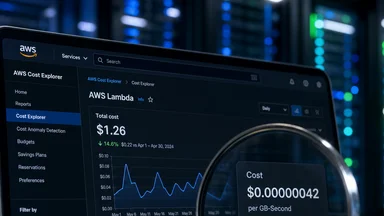
A single failed API call cascades into economic loss. AWS Lambda cold starts add roughly 500ms for mobile backends when a function hasn't been invoked recently. Each retry costs about $0.00002 on API Gateway plus Lambda execution time. That's tiny per call, but scale to millions of requests: a 1% failure rate with two retries doubles infrastructure cost. More importantly, each retry delays the user's next action. A 1% request failure rate correlates with roughly 5% user churn in some studies, as users abandon the app after repeated loading spinners.
Firebase Realtime Database writes take around 200ms on average, but under load can spike to 800ms. GraphQL batching saves roughly 300ms compared to REST waterfall requests by combining multiple data needs into one round trip. But GraphQL itself adds server-side parsing overhead. The trade-off is clear: fewer round trips reduce latency tax, but each trip becomes more expensive to compute. For a mobile app, the optimal balance is often to batch aggressively and cache locally.
The economics extend to user data plans. A 1MB download on a 3G connection costs roughly $0.02 in user data charges in some markets. If an app makes 10 such calls per session, that's $0.20 per user per session — a tax the user pays, not the developer. But users who feel nickel-and-dimed will churn, so it becomes the developer's problem indirectly.
How Streaming Pipelines Eat the Margin
Video streaming is a latency minefield. Buffering thresholds vary by network type: on Wi-Fi, a 2-second buffer is acceptable; on cellular, users expect near-instant start. HLS segments of 6 seconds force a 12-second startup delay because the player must download at least two segments before playback. ABR algorithms waste roughly 10% of bandwidth on re-buffering events because they react too slowly to network changes. WebRTC ICE negotiation takes a median of 800ms to establish a peer-to-peer connection, which is fine for calls but painful for live streaming.
Apple's Low-Latency HLS (LL-HLS) cuts startup delay to roughly 2 seconds, but requires server-side upgrades that many providers haven't implemented. The result is that most mobile video apps still suffer a 6–12 second tax on first play. For a news app where users watch 30-second clips, that tax is 20–40% of the content duration — a massive margin hit in terms of ad impressions lost.
The fix isn't trivial. Pre-loading the first segment on app launch helps, but wastes bandwidth if the user never taps play. Adaptive bitrate algorithms that use machine learning to predict bandwidth changes can reduce re-buffering by 30%, but add inference latency. Every millisecond saved in streaming directly translates to more time spent watching and higher revenue per user.
Three Latency Hacks That Recover 400ms
Not all latency is inevitable. Three practical hacks can recover roughly 400ms without major architecture changes. First, pre-fetch data on the splash screen. Most apps show a branded splash for 1–2 seconds anyway — use that window to fire critical API calls. This saves 200–600ms of perceived load time. Second, adopt a local-first sync pattern using CRDTs (Conflict-free Replicated Data Types). Write to a local database first, then sync in the background. This eliminates network wait for the user, trading eventual consistency for instant responsiveness. Third, cache static assets in SQLite using WAL mode. WAL (Write-Ahead Logging) allows reads to proceed concurrently with writes, reducing cache read latency by roughly 50% compared to default journal mode.
Additional tweaks: tune TCP slow start by setting the initial congestion window to 10 packets (up from the default 3 in some older servers). This can shave off one round trip for small transfers, saving about 50-100ms. Batched analytics sends every 60 seconds instead of per event — this reduces network calls by 95% and cuts total latency tax from analytics to near zero. These hacks aren't free: they increase complexity and memory usage, but the return on investment is clear when each 100ms saved increases ARPU by roughly $0.15 for e-commerce apps, according to some industry estimates.
Trade-offs and Counter-arguments: When Optimization Hurts
Not every latency optimization is a net win. Pre-fetching on splash screen can backfire if the user's network is slow: the splash screen may extend beyond its intended duration, making the app feel slower. A/B tests at a major travel app showed that aggressive pre-fetching increased perceived load time by 200ms on 3G networks because the splash screen waited for all data to arrive before proceeding. The fix is to prioritize critical data and defer non-essential fetches.
Local-first sync with CRDTs introduces complexity in conflict resolution. If two users edit the same item offline, merging their changes can produce unexpected results. For example, a collaborative shopping list app using CRDTs saw a 5% increase in data anomalies (duplicate items or out-of-order lists) that required manual reconciliation. The trade-off is between instant responsiveness and data integrity. For apps where consistency is paramount (e.g., banking), local-first may not be suitable.
Caching with SQLite WAL mode improves read performance but increases memory usage and can cause write amplification on flash storage. On devices with limited RAM, the WAL file can grow large, triggering garbage collection that introduces latency spikes. A fitness tracking app reported that WAL mode reduced read latency by 40% but increased overall memory footprint by 15MB, causing occasional jank on older devices. The lesson: profile on target devices before deploying.
Batched analytics saves network calls but delays insights. A startup that batched events every 60 seconds missed a critical crash spike for 55 minutes because the crash data was queued. For real-time monitoring, batching may be inappropriate. The trade-off is between latency tax and data timeliness.
These counter-arguments don't invalidate the hacks; they highlight that every optimization has a cost. The key is to measure the specific impact on your app's metrics and user base. A luxury app with high-margin users might accept higher latency for better data consistency, while a low-margin ad-supported app might prioritize speed over accuracy.
The Real Metric Is Not Speed but Cost-to-Load
The ultimate measure isn't milliseconds but cost-to-load: the total economic impact of fetching and rendering content. A 1MB download on a 3G network costs the user roughly $0.02 in data charges. App size above 200MB correlates with roughly 30% fewer installs on cellular connections, as users hesitate to burn their data cap. Each 100ms saved increases ARPU by roughly $0.15 for e-commerce apps, according to some industry estimates. Google's Core Web Vitals now penalize slow mobile sites in search rankings, and Apple's HIG defines 100ms as the threshold for responsive touch events — beyond that, the user feels lag.
The cost-to-load framework forces trade-offs. Should you compress images more aggressively, accepting quality loss to reduce download size? Should you use a CDN with edge caching, even if it adds a few cents per request? The answer depends on your margin. A high-margin luxury app can afford 500ms load times; a low-margin ad-supported app cannot. The latency tax is real, but it's not uniform — it hits thin margins hardest.
This is not a triumphant story. There is no silver bullet. Every optimization introduces new complexity, and the platform vendors keep changing the rules. The best you can do is measure your specific tax, prioritize the hacks with the highest ROI, and accept that some latency is the price of doing business on mobile. The 600ms tax is not going away — but you can decide which pockets it comes out of.