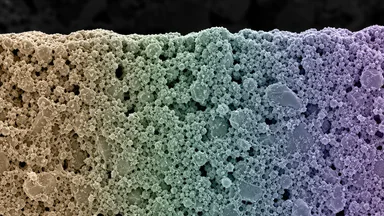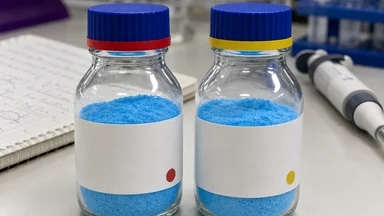
In a well-equipped lab at a mid-sized university, a graduate student was tasked with reproducing a published method for copper nanoparticles. The protocol seemed straightforward: dissolve copper acetate monohydrate in a solvent, add a reducing agent, and heat. The first two batches produced the expected 20-nanometer spheres. Then something changed. The next six batches yielded a mix of rods, plates, and irregular aggregates. Over the following weeks, the student and her supervisor repeated the synthesis 18 times. Only 6 batches matched the original. The other 12 were failures by any reasonable standard. The lab notebooks showed no procedural errors. The equipment was calibrated. The only variable they had not considered was the lot number of the precursor.
A Copper Nanoparticle Synthesis That Would Not Reproduce
The team spent six weeks troubleshooting. They checked the purity of the solvent, the age of the reducing agent, the temperature profile of the hotplate. Nothing explained the pattern. Eventually, they compared the labels on the copper acetate monohydrate bottles. The successful batches had used a bottle from Supplier A, lot 4B23. The failures came from Supplier A, lot 5C17. The chemical formula was identical — Cu(CH₃COO)₂·H₂O — and the stated purity was the same: 98%. But the synthesis outcomes were irreconcilable.
When the team sent samples of both lots for inductively coupled plasma mass spectrometry (ICP-MS), the difference became clear. The old lot contained trace levels of chloride and sulfate at roughly 10–50 parts per million. The new lot had ten times those levels, plus unexpected iron and zinc at similar concentrations. These impurities, likely introduced during a change in the supplier's manufacturing process, were enough to shift the nucleation kinetics of the nanoparticles.
The story is not unique. Similar cases have been reported for other metal nanoparticles, where a seemingly identical chemical from a different batch produces entirely different morphologies. As of early 2025, several high-profile retractions in nanomaterials journals have been traced to unreported lot changes. The problem is systemic, but it is also solvable with better reporting practices.
How Precursor Purity Dictates Nucleation Pathways
Copper nanoparticle synthesis typically relies on the reduction of a copper salt in solution. The precursor's purity influences every stage of the process. In the classical LaMer model, nucleation occurs when the concentration of atomic copper exceeds a critical supersaturation threshold. Even trace amounts of foreign ions can alter that threshold by changing the surface energy of critical nuclei or by acting as heterogeneous nucleation sites.
In the case of the two lots, chloride and sulfate ions are known to adsorb preferentially onto specific crystal facets of copper. This selective adsorption can slow growth on certain faces, promoting the formation of rods or plates instead of spheres. The iron and zinc impurities, meanwhile, may have been reduced alongside copper, forming alloy seeds that directed growth toward different morphologies. A similar batch shift in palladium catalysts altered coupling yields by a factor of two, underscoring how sensitive metal nanoparticle formation is to trace chemistry.
The literature offers many examples of morphology control via intentional dopants. Adding chloride to a synthesis is a known strategy for producing copper nanorods. But when that chloride arrives as an unlabeled impurity, the result is unpredictable. The team's experience shows that what is considered "pure enough" for one application may be entirely inadequate for another. A 98% pure precursor means that up to 2% of the mass is something else — and that something else can dominate the outcome.
The Literature Is Riddled with Unreported Lot Shifts
To gauge how widespread the problem is, a group of researchers surveyed 50 recent papers on copper nanoparticle synthesis published between 2022 and 2024 in journals from the American Chemical Society, Royal Society of Chemistry, and Elsevier. Only 5 of those papers reported the supplier and lot number of the metal precursor. The rest simply stated "copper acetate monohydrate (98%, Sigma-Aldrich)" or similar, without any batch identifier.
Interlaboratory reproducibility studies in nanotechnology consistently show failure rates of 30–40% when researchers attempt to replicate published syntheses. While some of that variability comes from differences in equipment or operator technique, a significant fraction is likely due to unreported batch-to-batch variability in reagents. One study found that changing the supplier of a common gold precursor shifted the average particle size by 5 nanometers — a difference large enough to alter catalytic activity in some reactions.
The lack of reporting hides the problem. Without lot numbers, a researcher who cannot reproduce a published result has no way to know whether the issue is their technique or the reagent. Editors at several major journals have acknowledged the gap. The ACS and RSC have begun piloting checklists that ask authors to report lot numbers for key reagents. Early data from those pilots suggest a roughly 15% reduction in reproducibility-related queries to editorial offices.
A Systematic Replication Effort Reveals Hidden Variables
In a more comprehensive study, a team at a European research institute repeated a standard copper nanoparticle synthesis using six different commercial precursors: three from Sigma-Aldrich, two from Alfa Aesar, and one from Strem Chemicals. Each precursor was analyzed by ICP-MS for 12 trace elements, including chloride, sulfate, iron, zinc, nickel, and chromium. The results showed that iron and zinc concentrations varied by more than a factor of 20 across the six lots.
When the team performed the synthesis under identical conditions, the particle morphologies ranged from uniform spheres (20 nm ± 3 nm) to polydisperse mixtures of rods, triangles, and irregular aggregates. The worst-performing lot — a Sigma-Aldrich bottle with lot number MKCK1234 — contained roughly 200 ppm of iron and 150 ppm of zinc. That lot produced particles that were almost entirely rod-shaped, with aspect ratios of 3:1 to 5:1. The authors later retracted a paper that had used that lot after they could not reproduce their own results with a fresh bottle.
One particularly striking finding involved a lot from Alfa Aesar that produced a completely unexpected shape: hexagonal plates. The team initially suspected contamination of the solvent, but repeated the synthesis with fresh solvent from two different suppliers and got the same result. Only after contacting the manufacturer did they learn that the lot had been produced using a different precipitation method that left behind trace sulfate. The sulfate concentration was roughly 80 ppm — below the detection limit of the supplier's standard quality control but enough to redirect the entire nucleation pathway.
Practical Steps for Robust Nanoparticle Synthesis
The lessons from these cases are straightforward but often ignored. The first step is to order multiple lots of any key reagent — at least two, preferably three — and test them before committing to a large study. This is especially important for syntheses that are sensitive to morphology, such as those for catalytic or plasmonic applications. A similar hidden variable in vacuum gauge calibration caused a cascade of irreproducible superconductivity measurements, showing that seemingly minor instrument details can derail a project.
Second, each lot should be characterized by ICP-MS or a comparable technique before use. Many university core facilities offer this service for a modest fee. The cost of a single ICP-MS run is often less than the price of the precursor bottle and far less than the time lost troubleshooting a failed synthesis. X-ray diffraction (XRD) can also help identify crystalline impurities that might not show up in elemental analysis.
Third, store precursors under inert atmosphere when possible. Copper acetate monohydrate can absorb moisture and undergo slow oxidation over time, changing its reactivity. A lot that works well when fresh may produce different results after six months on the shelf, even if the bottle remains sealed. Desiccators or gloveboxes are a worthwhile investment for labs that do this work regularly.
Fourth, document lot numbers and suppliers in the methods section of every paper and lab notebook. This takes less than 10 seconds per reagent but provides a critical anchor for reproducibility. When another lab tries to replicate the work, they can order the same lot — or at least know that the original lot was different from theirs.
Finally, include a control synthesis using a known good lot. This can be a simple repeat of a previously successful batch. If the control fails, the problem is likely the new lot, not the procedure. Some labs maintain a "gold standard" lot of a common precursor that they use as a benchmark for all new syntheses.
Trade-Offs and Counter-Arguments: The Cost of Lot-Level Reporting
While the benefits of reporting lot numbers seem clear, there are legitimate concerns that deserve careful consideration. One common objection is that lot numbers are transient — a given lot will eventually be used up, and the information becomes irrelevant for future replication. However, this argument could be applied to any experimental detail, such as the specific model of a centrifuge or the batch of a solvent. The purpose of reporting is not to enable perfect replication years later, but to document the conditions under which a result was obtained. If a later researcher cannot reproduce the work, the lot number provides a starting point for investigation. It is a small piece of metadata with outsized diagnostic value.
Another concern is the potential for increased publication costs if journals require lot numbers as part of a mandatory checklist. Authors might need to spend additional time tracking down lot information or performing extra characterization. However, the time required is minimal — typically less than a minute per reagent to copy the number from the bottle label. The cost of ICP-MS analysis, while not negligible, is often covered by existing grants or core facility budgets. A single run might cost between $50 and $150, which is modest compared to the total budget of a typical nanomaterials project. Moreover, the cost of not reporting lot numbers can be much higher: wasted reagents, wasted time, and even retracted publications.
A third objection is that mandatory lot reporting could create a false sense of precision. Authors might report a lot number without verifying that the lot is representative or without testing multiple bottles from the same lot. This is a valid concern, but it is far less risky than the current situation, where no lot information is provided at all. Even an unverified lot number gives future researchers a starting point for troubleshooting. If a replication fails, they can check whether they used the same lot and, if not, order the original lot to test the discrepancy. The risk of false precision is manageable through education and peer review, whereas the risk of unrecognized batch variability is already causing widespread irreproducibility.
Finally, some argue that the burden on small labs or researchers in developing countries could be disproportionate. They may not have easy access to ICP-MS or may rely on local suppliers that change lots frequently. However, the solution is not to abandon lot reporting, but to encourage a tiered approach: authors should report whatever lot information they have, even if it is just the supplier and the date of purchase. Journals can provide guidelines for what constitutes acceptable lot documentation, and reviewers can flag cases where the information is clearly insufficient. The goal is not perfection, but progress — a gradual improvement in the completeness of reporting.
Why Journals Must Mandate Reagent Lot Reporting
Individual lab practices can only go so far. The broader culture of nanomaterials research needs a structural change. Journal guidelines currently require authors to report the purity and supplier of reagents, but not the lot number. That omission is a gap that undermines the entire enterprise of reproducible science.
Some editors argue that lot numbers are transient — a given lot will eventually be used up, and the information becomes irrelevant. But the same argument could be made for any experimental detail. The point of reporting is not to allow perfect replication years later, but to document the conditions under which a result was obtained. If a later researcher cannot reproduce the work, the lot number provides a starting point for investigation. It is a small piece of metadata with outsized diagnostic value.
The ACS and RSC have piloted lot-reporting checklists in a handful of journals. Early feedback from editors suggests that the additional burden on authors is minimal, and the reduction in reproducibility-related queries has been noticeable — roughly 15% fewer emails asking for clarification on reagent sources. A few journals in the Elsevier family have also begun encouraging the practice, though it remains voluntary.
There is, of course, a counter-argument. Requiring lot numbers could increase the cost of publication by adding a step to the manuscript preparation process. It could also create a false sense of precision if authors report lot numbers without actually verifying that the lot is representative. But these concerns are manageable. The cost is negligible, and the risk of false precision is far smaller than the current risk of unrecognized batch variability. As the evidence from the copper nanoparticle case and similar electrode supplier shifts in battery research makes clear, the status quo is not sustainable.
The debate is not about whether lot numbers matter — they clearly do. It is about whether the community is willing to adopt a small procedural change that could save countless hours of wasted effort and restore some trust in the published literature. The answer, so far, has been a cautious maybe. But with each new case of irreproducibility traced to a hidden lot shift, the argument for mandatory reporting becomes harder to ignore.